
Designing a swimming pool involves a multi-faceted approach, blending aesthetics, functionality, and technical details. Below is a comprehensive description of a full swimming pool design:
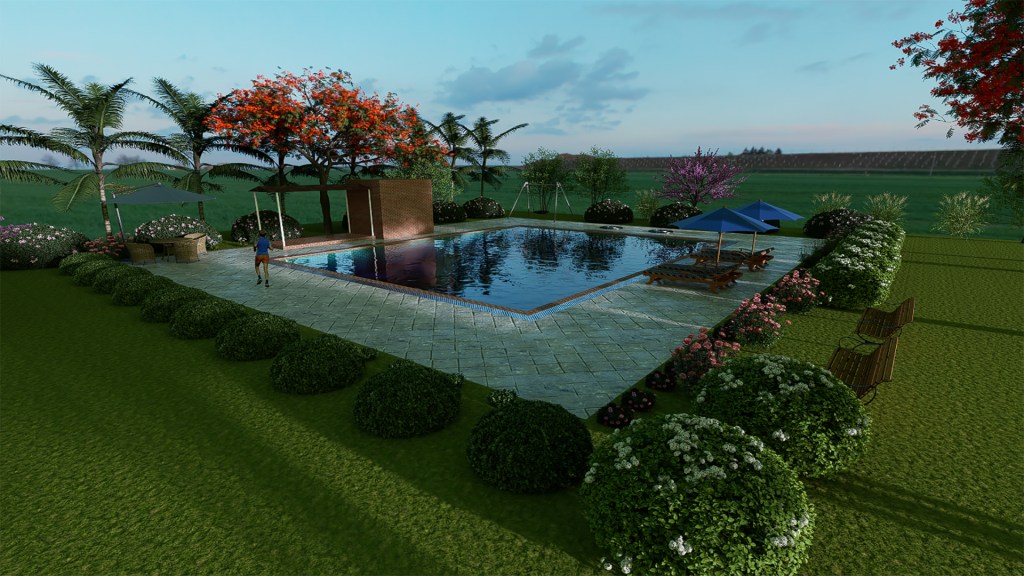
1. Concept and Purpose
Objective: Define the primary use of the pool, whether for leisure, exercise, therapy, or entertainment.
Design Vision: Establish a theme or style that aligns with the property’s overall aesthetic—modern, classic, tropical, Mediterranean, etc.
2. Dimensions and Shape
Size:
- Length: Typically ranges from 20 to 50 feet, depending on use (e.g., lap pools are longer).
- Width: Commonly between 10 to 20 feet.
- Depth: Varies from 3 to 6 feet, with deeper sections for diving or shallow areas for lounging.
Shape:
- Standard Shapes: Rectangular, square, oval, round, or kidney-shaped.
- Custom Designs: Free-form or geometric shapes tailored to the site and user preferences.
3. Materials and Finishes
Interior Finish:
- Plaster: Smooth and durable, available in various colors.
- Tile: Includes ceramic, glass, or mosaic tiles, offering intricate designs.
- Pebble: A textured surface with a natural look and added grip.
Decking:
- Materials: Natural stone (e.g., travertine, granite), concrete, pavers, or wood.
- Texture: Non-slip finishes for safety, such as brushed or stamped concrete.
Coping:
- Material: Typically stone, concrete, or tile.
- Design: Edged to complement the pool’s overall style, often with a bullnose or squared edge.
4. Water Features
Waterfalls: Built into one or more pool walls, can be natural or designed.
Fountains: Placed at various points, such as the pool’s center or edges.
Bubblers and Jets: Located in the pool floor or walls for added effect and relaxation.
5. Additional Features
Spa or Hot Tub: Integrated or separate, with jets, seating, and often at one end of the pool.
Vanishing Edge: Creates a visual effect of the water disappearing into the horizon, often used in elevated designs.
Swim-Up Bar: A counter or seating area within the pool for socializing and enjoying refreshments.
6. Surrounding Landscape
Landscaping: Includes plants, trees, shrubs, and ornamental features to complement the pool area.
Furniture: Poolside loungers, umbrellas, tables, and seating areas designed for relaxation and entertainment.
Outdoor Kitchen or BBQ: Optional addition for outdoor cooking and dining.
Pathways: Walkways made of stone, tile, or concrete leading to and around the pool area.
7. Technical and Structural Elements
Filtration System:
- Type: Cartridge, sand, or diatomaceous earth filters.
- Placement: Typically housed in a dedicated equipment area or enclosure.
Heating:
- Options: Heat pumps, solar panels, gas heaters.
- Integration: Automated systems for maintaining water temperature.
Lighting:
- Types: LED, fiber optic, or traditional lighting.
- Placement: Underwater lights, deck lights, and landscape lighting for safety and ambiance.
Safety Features:
- Fencing: Enclosures around the pool area, complying with local regulations.
- Covers: Automatic or manual pool covers for safety and maintenance.
- Non-Slip Surfaces: Ensures safe walking areas around the pool.
8. Maintenance and Sustainability
Cleaning Systems: Automatic pool cleaners, skimmers, and vacuums to maintain water quality.
Water Treatment: Systems for chemical balancing, including chlorine or saltwater chlorinators.
Eco-Friendly Features:
- Water Conservation: Efficient filtration and recycling systems.
- Sustainable Materials: Use of eco-friendly materials and practices.
9. Integration with Existing Structures
Architectural Harmony: The pool design should complement the existing architecture and landscaping of the property.
Accessibility: Considerations for entry points, pathways, and integration with existing outdoor living spaces.
10. 3D Representation (Optional)
Visual Details: Realistic textures, lighting, and reflections to provide a comprehensive view of the final design.
Interactive Elements: Features that allow clients to explore different angles, materials, and configurations in a virtual environment.
This detailed description encompasses the critical elements of designing a swimming pool, ensuring that all aspects from aesthetics to functionality are addressed.
 Best Swimming Pool Company